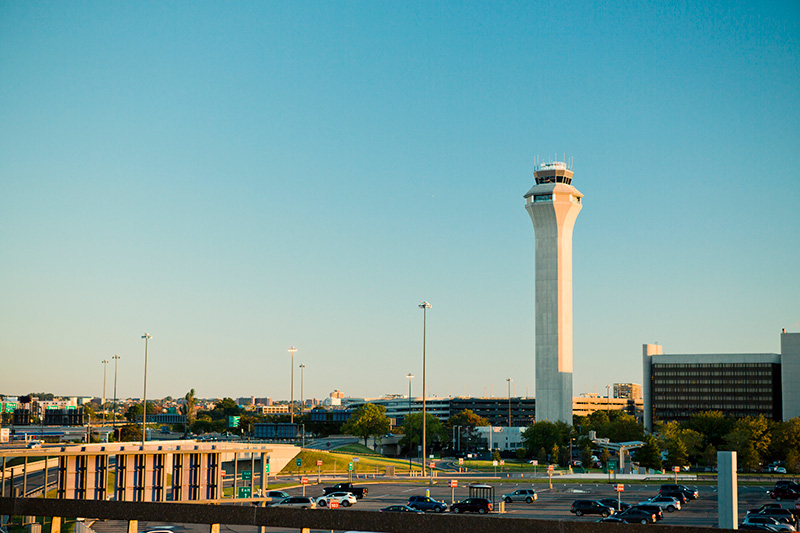
This week, the U.S. Department of Transportation and Federal Aviation Administration (FAA) took another important step toward modernizing America’s air traffic control system with the installation of a new surface movement radar system at Newark Liberty International Airport (EWR).
The new technology will give air traffic controllers greater visibility of aircraft and vehicles moving across the airport’s surface, helping them better manage activity on the ground and strengthening the resilience of the National Airspace System (NAS).
For the Modern Skies Coalition, this installation is a clear example of what federal investment can deliver. When we invest in the aviation infrastructure Americans rely on every day, progress is possible, and it is happening now.
The Newark installation is part of a much larger, nationwide modernization effort underway at airports and FAA facilities across all 50 states. The FAA has already made significant progress, including replacing approximately 60% of its legacy copper infrastructure with fiber, deploying dozens of new surface awareness systems and radar systems, upgrading communications equipment from analog to digital, installing new voice switch systems and converting additional facilities to electronic flight strips.
The agency has also hired 2,000 new air traffic controllers, the fastest hiring pace in FAA history. These investments are strengthening the people, technology and infrastructure that keep our aviation system moving.
But replacing aging hardware is only part of the modernization equation.
New infrastructure needs modern software to operate at its full potential.
Today’s air traffic control system still relies on technology and software developed decades ago. Modernizing the physical infrastructure while leaving outdated software in place is like putting the latest computer hardware in place but running software from the 1990s. The hardware may be new, but the system cannot operate at the level it should.
That is why the next phase of modernization is so critical.
The FAA is working to develop and deploy new software designed to improve efficiency, resilience and safety across the NAS. Completing that effort will require an additional $20 billion in federal investment.
The need for investment also extends to the facilities that support our air traffic controllers and aviation infrastructure. Across the country, many FAA towers and facilities are decades old, with some dating back to the 1960s and 1970s. Aging buildings and infrastructure cannot support the aviation system of the future. The country also needs investment to replace its oldest and most critical facilities with modern infrastructure.
The goal should be to bring these pieces together. We should not modernize the hardware today and wait years for the software and facilities needed to make it work.
America has already demonstrated what investment can accomplish. Now, we need to finish the job.
The Modern Skies Coalition supports continued, sustained investment to fully modernize the NAS. An additional $20 billion would help deliver the modern software needed to unlock the capabilities of the new infrastructure already being deployed and move the aviation system toward a safer, more resilient and more efficient future.
The radar installation at Newark is more than a new piece of equipment. It is a tangible demonstration of investment in action—and a reminder that with the right resources, America can build the air traffic control system the traveling and shipping public deserves.
The modernization effort is moving at historic speed. Congress should keep that momentum going.
The technology is here. The progress is happening. Now, let’s finish the job.